

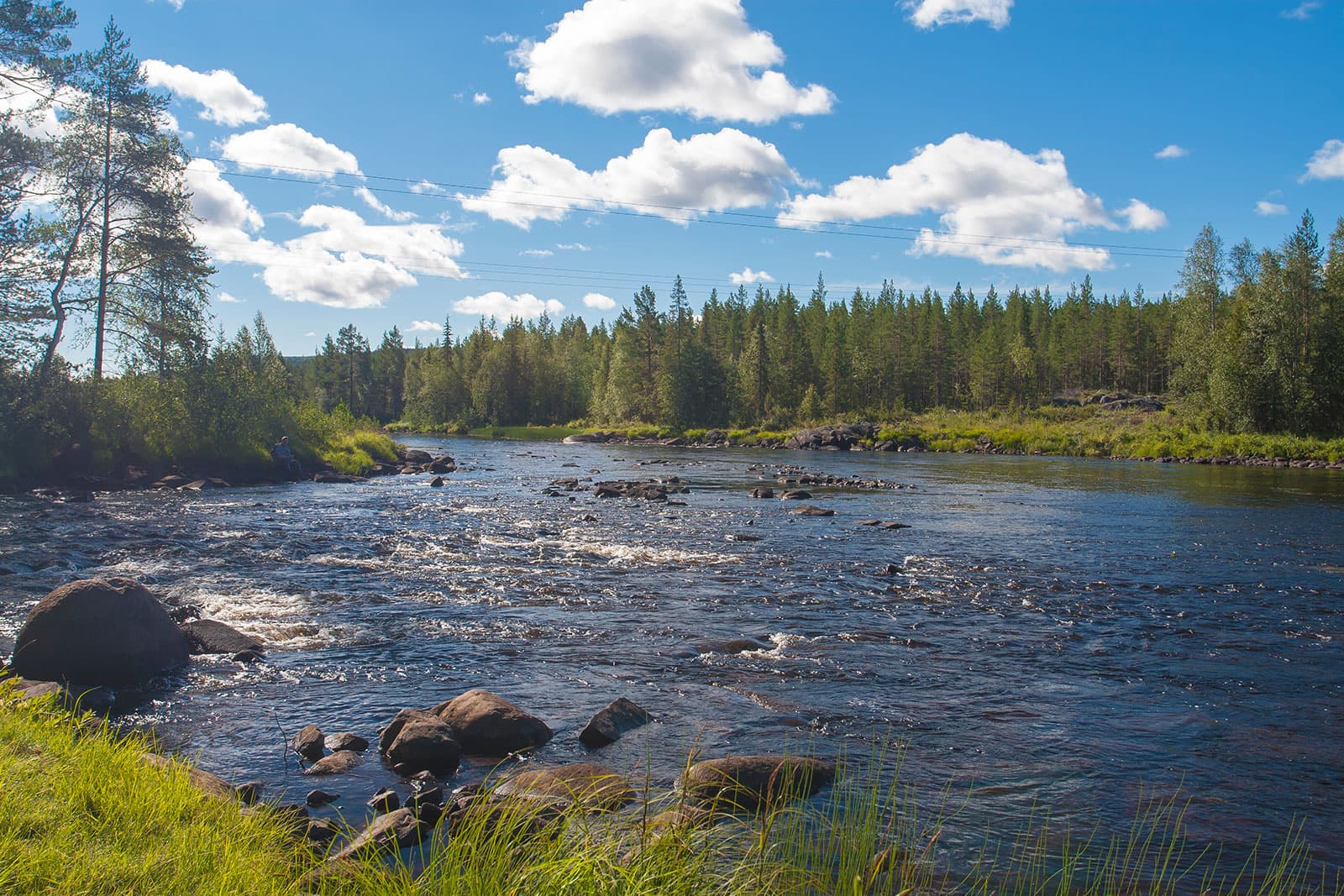
Byskeälven FVO - Fångstrapporter
This dashboard aggregates individual catch reports submitted by anglers fishing the Västerbotten (lower) section of Byskeälven. Each entry is a voluntary report — logged either as a caught fish with species, length and method, or as a "no fish" return from a full day on the water.
Reports from 2019–2022 were imported from the FVO’s historic Drupal catch diary and contain catches only. From 2023 onwards the feed comes directly from ifiske.se and includes full "Ingen fisk" returns, which lets us show a meaningful catch rate alongside absolute catch counts. Use the charts below to explore how the season unfolds, which zones and methods outperform others, and how the current year compares against recent history.
How the season unfolds
The Västerbotten beats come alive in May as the ice retreats and kelts, descending spawners and the first fresh salmon are reported — reports climb quickly and most of the early fish fall to spinning gear in the lower zones. June is the busiest month of the year, with close to 2,000 reports logged, driven by the main salmon run. Activity dips slightly in July once fish have settled into holding pools, then returns to a second peak in August when the 50–63 cm retention slot opens and fly anglers target fresh fish in the lower beats before the season closes on the 31st.
Across the section, Zone 1 and Zone 5 see the heaviest reporting — together they account for over 55 % of all entries. The biggest salmon on record from this FVO is 120 cm, caught twice (both on two-handed fly in 2022). More than a dozen fish over the metre mark have been reported since 2019, making this a genuine trophy-salmon section by Scandinavian standards.
Species recorded
The dominant target on the Västerbotten beats. Average recorded length is 86 cm and the run is concentrated in June and August. Most salmon are reported on two-handed fly gear, with spinning accounting for around one in five salmon.
Notes on data
Anglers are not obliged to report unsuccessful trips before 2023, so catch-rate figures (fraction of reports that produced fish) are only meaningful from the 2023 season onwards. Before that, the widget treats each record as a successful catch. Around 21 % of all reports include a measured length; the remainder capture species, date, zone and method but no size — histograms and averages are therefore based on this sub-sample rather than the full catch list.