

Byskeälvens FVO Västerbottensdelen
Best historical conditions
Based on 567 days with weather + flow data. Overall mean catch rate: 38%.
Descriptive — picks the historical winner from 567fishery-days. Buckets with < 5 samples are excluded.
Byskeälvens FVO Västerbottensdelen covers the lower Västerbotten section of the Byske River in northern Sweden. The fishing area runs from the coastal side of the river system, near Byskefjärden, upstream towards the county border with Norrbotten. It is a long salmon fishing area with a strong migratory-fish character, shaped by water level, season, zone choice and the availability of suitable holding water.
The main target species are Atlantic salmon and sea trout. Other species occur in the wider system, including grayling, brown trout, perch, pike and whitefish, but they do not define the character of this water. This is primarily salmon and sea-trout water, not a casual mixed-species destination.
River character and zones
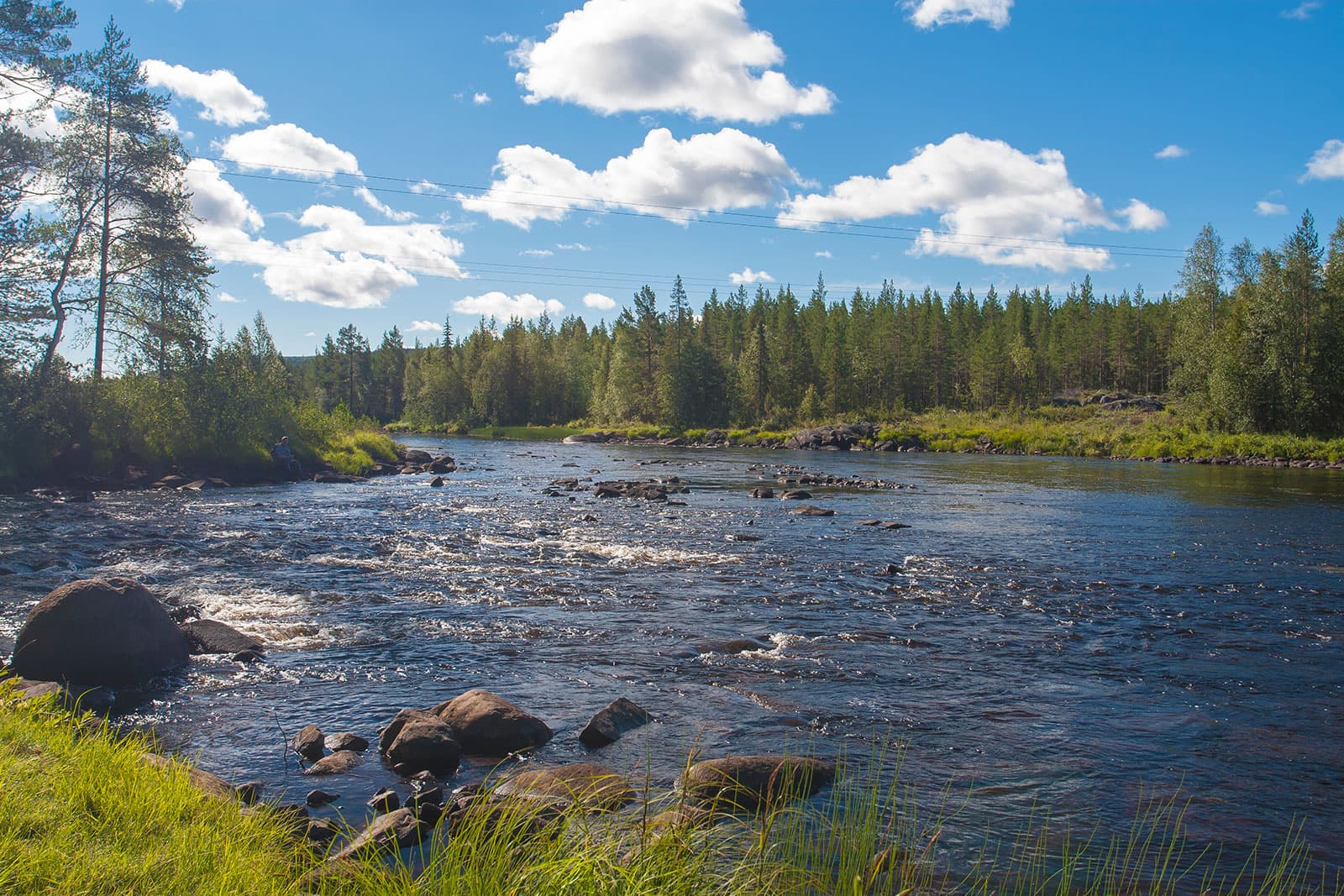
The Västerbotten section has the character of lower-river salmon water. Runs, pools, current seams, necks and tails all matter in how this fishing area is approached, especially as water levels and fish movement change through the season. Some stretches are better suited to covering travelling fish, while others offer more structured lies where salmon or sea trout may stop in the right conditions.
The water is best read in sections rather than as one continuous channel. Necks, pool bodies, boulder pockets and tails may each require a different casting angle, presentation speed and level of control. In higher water, softer edges and near-bank holding spots can become more important. In low or clear water, defined lies, longer presentations and quieter movement usually matter more.
Wading should be treated with care, especially in stronger flows or where the bottom is uneven. Many productive lines can be covered from closer to the bank, particularly before entering the water. The size of the fishing area also makes zone choice important. This is not water to cover randomly, but a system where the selected stretch should match the day’s flow, pressure and conditions.
River character and zones
The Västerbotten section has the character of lower-river salmon water. Runs, pools, current seams, necks and tails all matter in how this fishing area is approached, especially as water levels and fish movement change through the season. Some stretches are better suited to covering travelling fish, while others offer more structured lies where salmon or sea trout may stop in the right conditions.
The water is best read in sections rather than as one continuous channel. Necks, pool bodies, boulder pockets and tails may each require a different casting angle, presentation speed and level of control. In higher water, softer edges and near-bank holding spots can become more important. In low or clear water, defined lies, longer presentations and quieter movement usually matter more.
Wading should be treated with care, especially in stronger flows or where the bottom is uneven. Many productive lines can be covered from closer to the bank, particularly before entering the water. The size of the fishing area also makes zone choice important. This is not water to cover randomly, but a system where the selected stretch should match the day’s flow, pressure and conditions.
Season, species and fishing expectations
The season is best understood through salmon and sea-trout movement, water level and temperature. Early in the season, higher and colder water can make the river heavier and less predictable. Fish may travel close to the banks, hold in softer margins or sit deeper in stronger runs. Larger flies, heavier presentations or sink-tip setups may be relevant when they provide better control of the swing.
As the river settles, classic salmon water becomes easier to fish systematically. Runs, current seams, pool necks and tails can be worked with more precision. This is when zone choice, rotation and controlled coverage become especially important.
Later in the season, especially during low or clear water, the fishing area often demands a lighter approach. Smaller flies, longer leaders, quieter wading and more attention to morning or evening windows can become more important than power. Sea trout remains an important part of the fishing expectation, depending on timing, conditions and current regulations.
Season overview
Tactics and planning
Fishing this area well starts with preparation. Water level, recent catch reports, weather changes and access to a chosen zone can all affect the session. A fixed plan is less useful than a flexible one built around current conditions.
In stronger water, control is often the priority: the fly or lure has to work through the lie without moving too fast. In low water, presentation becomes more delicate, and unnecessary movement can spoil water before it is properly fished. Gear choice should follow the river: heavier tips and larger profiles may suit high water, while lighter presentations and smaller patterns are often more appropriate in summer conditions.
Methodical coverage is usually more valuable than constant movement. Near-bank water, longer lines, pool necks, tails and defined lies all require controlled pace and selective effort. The strongest sessions are usually built around fishing chosen water properly rather than moving between stretches too quickly.
Essential formal notes
A valid licence is required for Byskeälvens FVO Västerbottensdelen. Rules may vary by season, zone and method, especially for salmon and sea trout. Catch reporting, daily and seasonal limits, size rules, hook restrictions, catch-and-release periods and closed sections should be checked before fishing.
This overview does not replace the current regulations. Full licence conditions, prices, dates, reporting rules and method restrictions should be checked on the dedicated licence and rules page.
Final assessment
Byskeälvens FVO Västerbottensdelen is suited to experienced salmon and sea-trout anglers who are comfortable with a larger river system and changing conditions. Its value lies in the length of managed water, the zone structure, the presence of migratory fish and the need to match tactics to flow, season and pressure.
This is not water that can be understood from a single access point. It rewards preparation, selective zone choice and disciplined coverage of good water. Studying the fishing area before arrival helps narrow the session to the most relevant stretches and gives more time to fish the right lies at the right moment.