

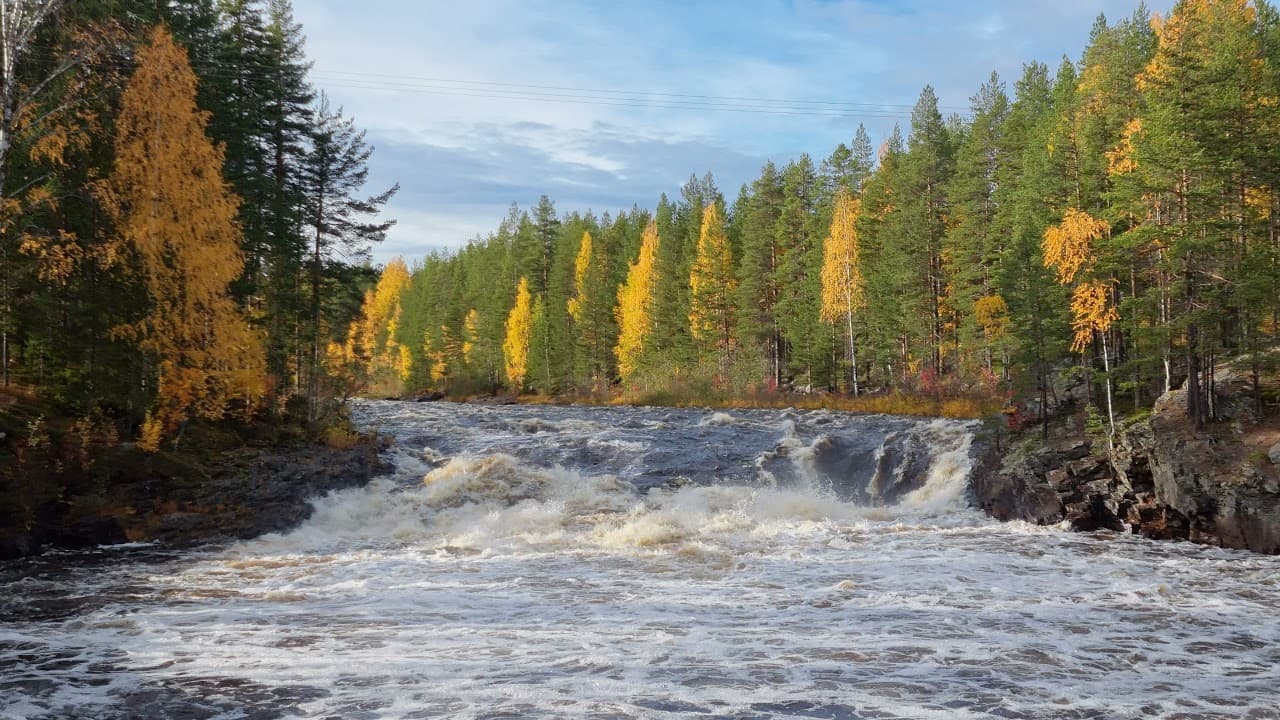
Gunnarsbyn, Råneälven
Råneälven has had a fish counting point at Gunnarsbyn, about 40 km upstream from the river mouth. The archived Swedish Lapland Fishing source describes it as a monitoring site for migrating salmon and trout, using a Simsonar echo-sounder / sonar-camera system. Counting started on 22 May 2014 and was linked to Degerselsbygdens samfällighetsförening, Länsstyrelsen and Sportfiskarna. For anglers, these records are useful as historical migration context for Råneälven, but they should not be treated as current live data unless current public data access is confirmed.
Quick facts


How to read the historical migration charts
These charts show archived migration records from the available Råneälven counting seasons in this dataset. They can help compare 2014, 2015, 2016, 2018 and 2019, identify the main migration window and show how movement through Gunnarsbyn changed between seasons.
Treat the charts as historical data from one monitoring point, not as a current picture of the whole river. With five available seasons, the data is useful for context, but it should not be used to define a full long-term average. It is better read as a snapshot of recorded migration during the years for which counting data is available.
A cumulative chart can show how quickly fish moved through the counter during the season. A weekly or monthly chart helps identify when movement builds, peaks and slows down. The clearest picture comes when historical migration is compared with current water conditions, local rules and recent reports from the sections you plan to fish.
Where the counter was located and why it mattered
The source places the Råneälven counter at Gunnarsbyn, near Tvättstugebron, about 40 km upstream from the river mouth. This position matters because fish recorded there had already entered the river and moved through the lower part of Råneälven before reaching the counter.
The counter did not describe every pool or fishing area in the river. It gave a signal from one defined monitoring point. For anglers, that distinction matters because fish recorded at Gunnarsbyn may still have needed time to move into upstream stretches.
How the fish counter worked
The source describes the system as a camera based on a Simsonar echo sounder. It recorded sonar signals to a computer, and the recording could later be analysed in a way similar to video footage. The system registered upstream and downstream movement, time of passage, fish size and movement pattern.
- Fish passed through the monitored area.
- The Simsonar system recorded sonar signals.
- The recording was saved for later analysis.
- Movement direction, timing, size and movement pattern were checked.
- Species identification was based on fish size and timing within the season.
This means the records should be treated as analysed monitoring data, not as a simple live counter feed. At the time, the source described this type of counting in Råneälven as unique in Sweden, with similar technology used in Torneälven at Kattilakoski.
How to use archived migration data
Use the Gunnarsbyn records as historical migration context, not as a live planning signal. They can help show when fish were recorded moving through Råneälven, how seasons differed, and how migration developed during the available years.
For trip planning today, these records should be combined with current river conditions, local regulations, recent catch reports and information from the local fishing area. The archived counts can help describe Råneälven’s migration history, but they should not be used on their own to judge whether the river is worth fishing in the current season.