How timber floating changed northern salmon rivers
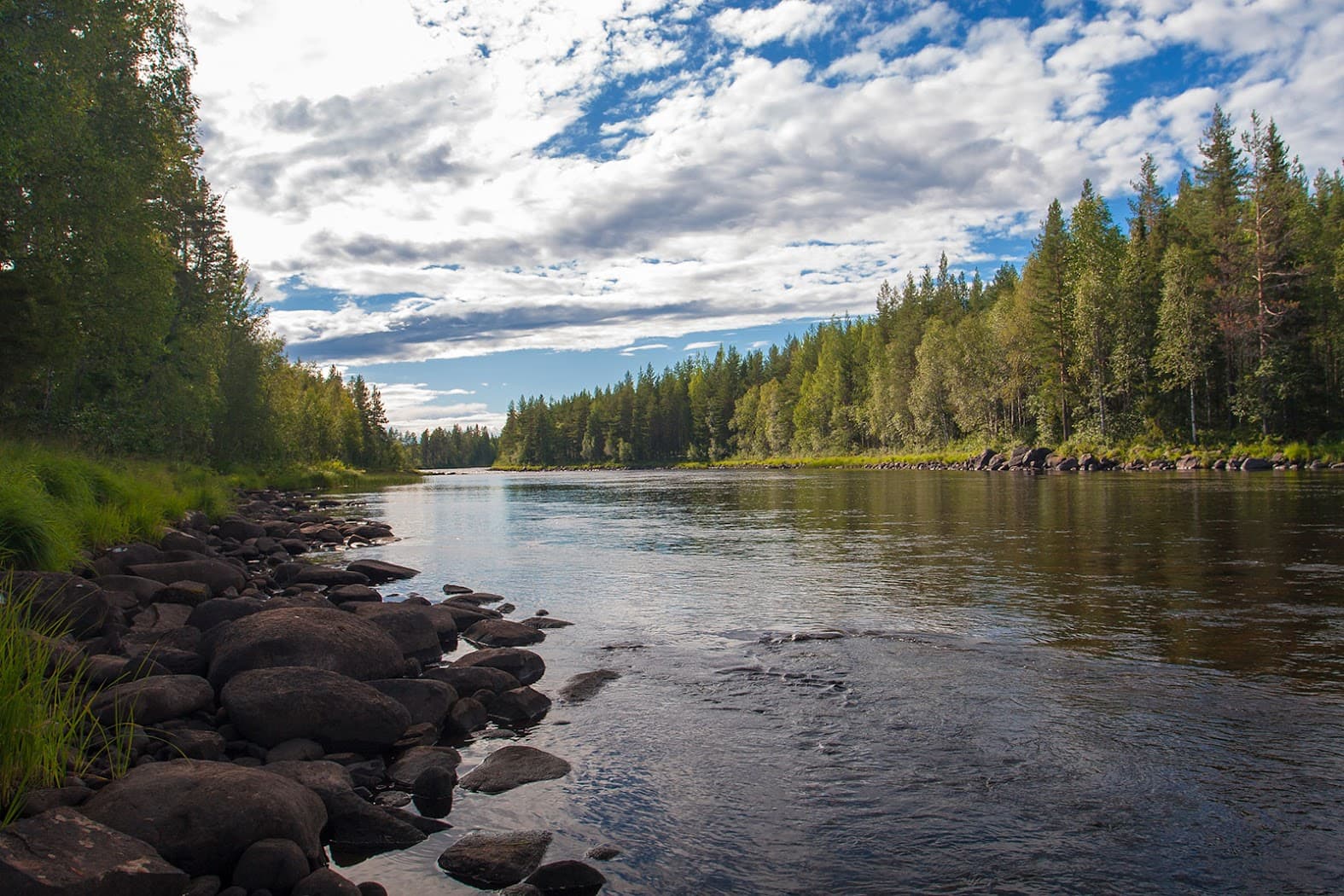
Many northern salmon rivers were physically changed to support timber floating. The goal was simple: logs had to move downstream as easily as possible. For the river, this often meant straighter channels, fewer boulders, blocked or disconnected side channels and less variation in flow.
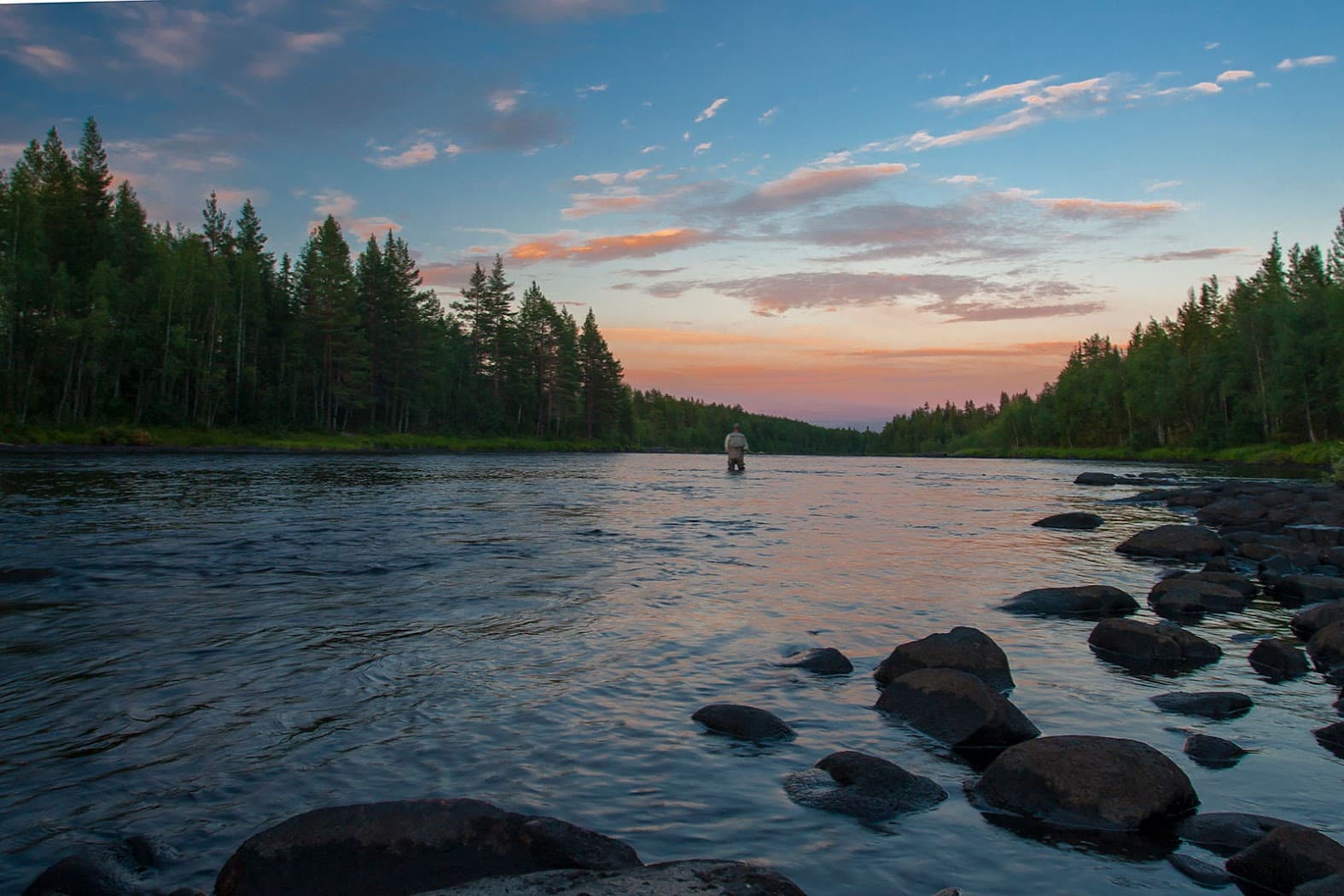
For salmon and trout, those changes mattered. A river can still look “wild” from the bank, but if its structure has been simplified, it may offer fewer places for spawning, juvenile fish and other aquatic life. That is why many restoration projects in northern rivers focus on bringing structure back: stones, gravel, side channels, flow variation and habitat complexity.
What timber floating was
Timber floating was the transport of logs down rivers toward mills, storage areas or the coast. In northern Sweden and other forest regions, rivers were used as transport routes before modern road and truck logistics took over.
To make floating easier, river channels were often modified. Fish habitat was not the priority; moving timber efficiently was. That difference explains why many timber-floating rivers later became restoration sites.
The European Commission’s LIFE ReBorN project summary describes timber-floating modifications as one of the reasons why natural habitats in boreal rivers were degraded. The same project focused on restoring altered river stretches and improving habitats for species including salmon and trout.
How rivers were changed
In practice, timber-floating work often made rivers simpler. Large stones and boulders could be removed, blasted, pushed to the sides or used to form guiding structures. Rapids and shallow areas were modified so logs would not get stuck. Side channels could be closed or disconnected to keep the main flow concentrated.
Research on timber floating in northern Sweden describes how channelised streams often lost boulders from the active channel, while material was pushed aside in ways that disconnected the river from parts of its natural margins. This could make flow faster and more uniform.
For a salmon river, this matters because variation is not decoration. It is part of how the river works. Different depths, flow speeds, stones, gravel and side channels create different kinds of habitat. When a river is simplified, those small but important differences can disappear.
What changed for salmon and trout
Salmon and trout need different habitats at different life stages. Adult fish need suitable spawning areas. Eggs need gravel with enough flow to bring oxygen through the riverbed. Young fish need cover, feeding areas and places where they can avoid the strongest current.
A channel that is too smooth and uniform can reduce those options. If large stones are removed, there is less shelter and less flow variation. If spawning gravel is lost or washed away, reproduction can suffer. If side channels are blocked or disconnected, young fish may lose slower, safer water during parts of the season.
This does not mean timber floating was the only pressure on salmon rivers. Hydropower, barriers, fishing pressure, marine survival, climate and land use can all matter. But in many northern rivers, timber-floating modifications left a physical footprint that is still important when we talk about restoration.
What restoration tries to reverse
River restoration often tries to undo part of that simplification. It does not usually mean turning the river back into an untouched system. It means restoring some of the structure and variation that fish and other aquatic life depend on.
In practical terms, restoration may include:
- placing large boulders back into the channel,
- reopening or reconnecting side channels,
- improving or creating spawning gravel,
- increasing variation in flow speed and depth,
- restoring shelter and nursery habitat for young fish.
This is the kind of work described in LIFE ReBorN: restoring channelised river stretches, moving large boulders back into rivers, opening blocked side channels and creating spawning grounds for salmon and trout. The project reported 242.7 km of restored river stretches and 14,169 spawning grounds created, exceeding its original targets.
Why this matters beyond one river
Byskeälven is one example, but the same background applies to many northern salmon rivers. Lögdeälven, Åbyälven, Piteälven, Kalixälven and other systems all sit in a wider landscape where timber floating, channelisation and later restoration shaped how rivers function today.
That does not mean every river was changed in the same way. Some stretches were heavily modified, some less so. Some later received restoration work, while others still show older physical changes. The important point is that river structure is part of the salmon story. It is not only about whether fish enter the river in a given week.
Key takeaway
Timber floating changed many northern salmon rivers by making them easier for logs, but less complex as habitats. Restoration work often tries to bring back some of what was lost: boulders, gravel, side channels, varied flow and better conditions for salmon and trout.
For salmon rivers, that structure matters over the long term. For anglers, it is useful context, not a fishing forecast. The decision to fish a specific stretch still depends on current water level, temperature, migration data, catch reports, local rules, permit access and the exact stretch you plan to fish.
 Read also