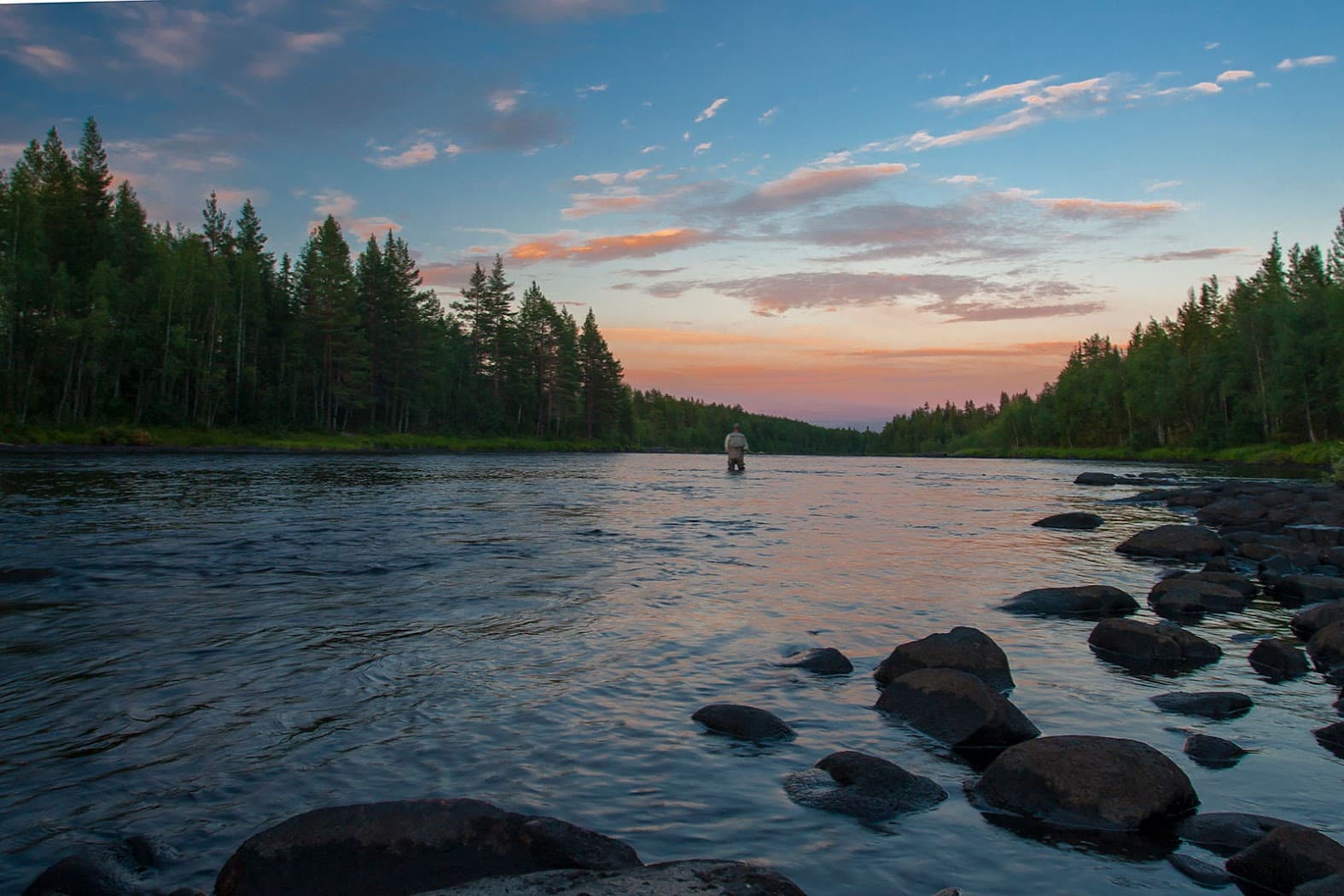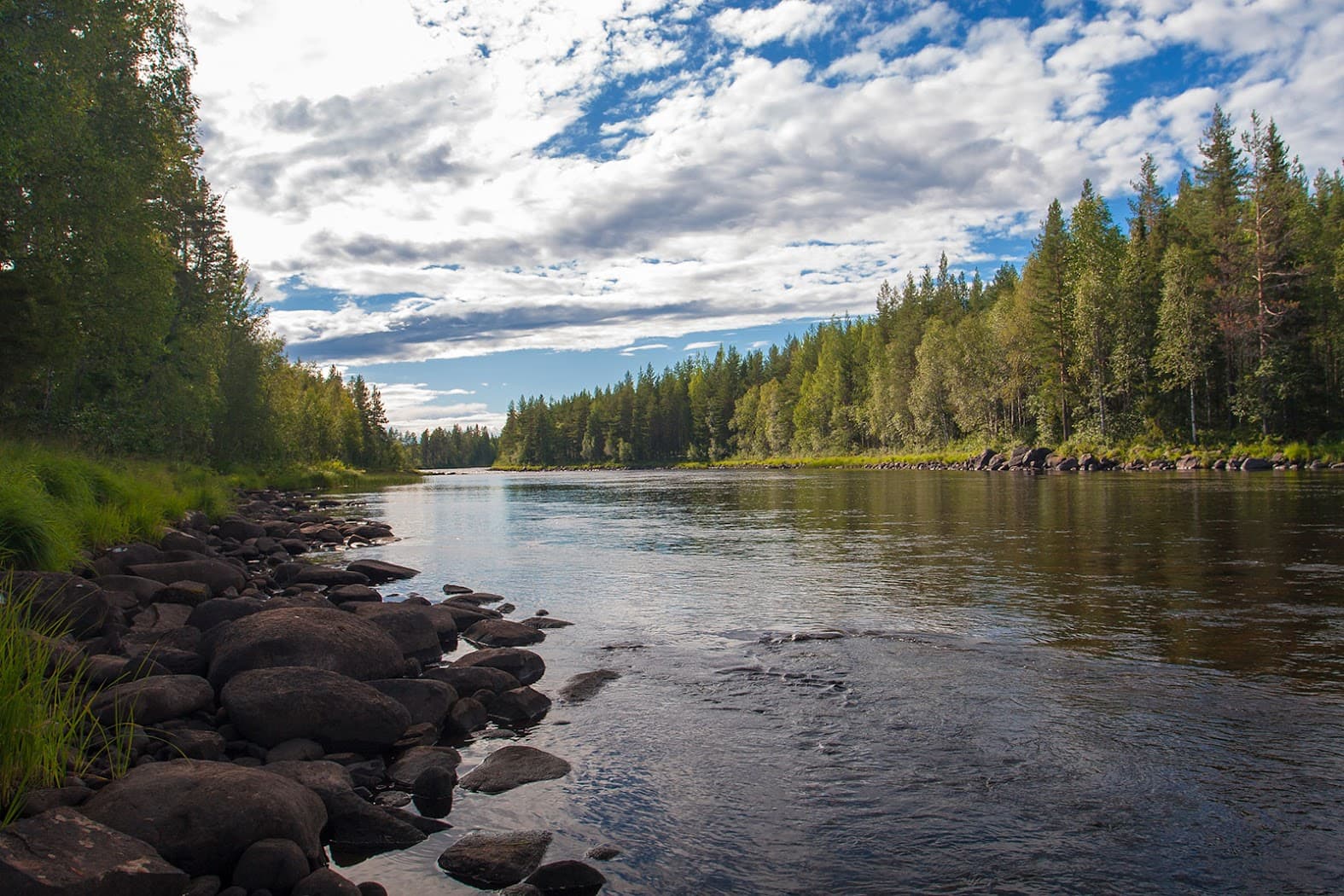
Byskeälven and salmon habitat restoration: what happened on the river?
Byskeälven is often treated as a salmon river in an angling context, but the most important restoration work linked with this system was not meant to promise more fish for anglers next season. It was mainly about improving river habitat: the physical places where salmon and trout can spawn, where young fish can grow, and where the river can function more naturally again.
This matters because many northern rivers were changed during the timber-floating era. Timber floating means that logs were transported down rivers to the coast. To make that easier, rivers were often straightened, cleared of large stones and simplified. LIFE ReBorN and the European Commission describe this kind of river engineering as one of the reasons why natural habitats in boreal rivers were degraded.
In the Byskeälven system, the LIFE ReBorN work focused on Långträskälven, a tributary of Byskeälven. The project page lists the section as Byskeälven / Långträskälven, reports 4.8 km restored and marks the work as completed.
What was LIFE ReBorN?
LIFE ReBorN stands for Restoration of Boreal Nordic Rivers. It was an EU LIFE project in northern Sweden, focused on restoring water environments in several catchment areas in Västerbotten and Norrbotten. The project received funding in 2016 and continued until 2022, with a total budget of roughly 12 million euros.
Across the project as a whole, ReBorN was about repairing river environments that had been physically changed. The European Commission describes the project goals as restoring channelised river stretches, moving large boulders back into rivers, opening blocked side channels and creating spawning grounds for salmon and trout.
For anglers, the key point is that this was not a quick way to produce more fish. It was work on the river itself.
What does restoration mean in practice?
In this context, restoration means trying to bring back some of the river’s lost physical variation. For a non-specialist, it helps to think of restoration as rebuilding river structure. A natural salmon river is not a smooth canal. It needs different speeds of water, stones, gravel, side channels, shelter and shallow areas where juvenile fish can live.
In practical terms, this type of work may include:
- putting large stones and boulders back into the river,
- reopening side channels,
- improving spawning gravel,
- creating more varied flow,
- restoring places where young salmon and trout can hide and feed.
The wider ReBorN project aimed to restore 202 km of channelised river stretches and create 2,300 spawning grounds for salmon and trout. The reported results exceeded those targets, with 242.7 km restored and 14,169 spawning grounds created across the project.
Why does this matter for salmon and trout?
Salmon and trout need more than clean water. Adult fish need suitable places to spawn. Eggs need gravel and flowing water that can bring oxygen through the riverbed. Young fish need cover, food and slower water close to faster currents.
When a river has been simplified, it may still look like a river, but it can lose many of the small habitats that fish depend on. Restoration tries to rebuild those conditions. It does not guarantee a strong salmon run every year, but it can improve the long-term habitat base that natural populations depend on.
That distinction is important. A restored stretch is not the same as a fishing forecast.
What should anglers not assume?
Restoration work can support better ecological conditions, but it does not mean that fishing will immediately improve. Salmon runs still depend on many factors: sea survival, river flow, water temperature, fishing regulations, spawning success and conditions across the whole river system.
For anglers, the right way to read this is simple: habitat restoration is a long-term positive sign for the river, not a short-term promise of catches. A restored area may help salmon and trout over time, but you still need to check current water level, temperature, migration data, local rules and recent reports before planning a trip.
The same logic applies to fish counter data: it gives useful context, but it does not answer the whole trip-planning question on its own.
Why Byskeälven is a good example
Byskeälven is a useful example because the restoration story is specific and measurable. The point is not simply to describe the river as “good for salmon”. We can point to a defined ReBorN section in the Byskeälven system: Långträskälven, where restoration work was completed and reported as 4.8 km restored.
It is also a good example of how salmon river content should be written. The focus should stay on what actually happened: habitat work, river structure, spawning conditions and ecological function. If the sources talk about habitat restoration, the article should not overstate it as direct salmon restocking or guaranteed salmon recovery.
Key takeaway
Byskeälven should be read as a river system where restoration work supported the long-term habitat base for salmon and trout, especially after historical changes linked with timber floating. In the LIFE ReBorN project, the relevant work focused on Långträskälven, a tributary of Byskeälven, and on river structure, spawning conditions and ecological function.
For anglers, the message should stay realistic: restoration improves the long-term foundation of the river, but it is not a direct forecast of fishing success. River conditions, rules, migration signals and local reports still matter when planning an actual trip.
 Read also