

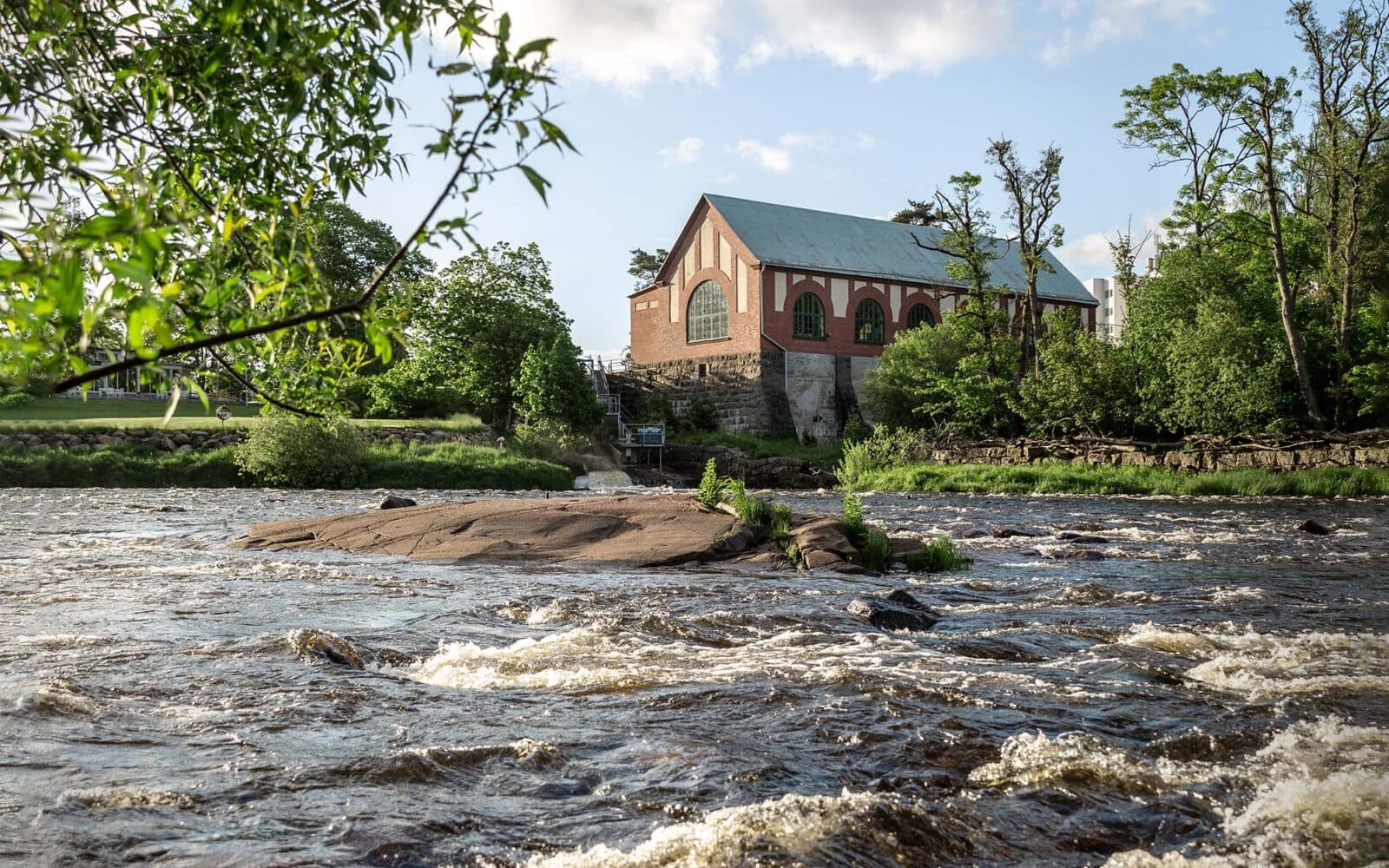
Herting, Ätran
Herting is a fish counter on Ätran that monitors fish migration through Hertingforsen in Falkenberg, near the lower part of the river. The current fish counter at Hertingforsen has been in operation since March 2014 and records fish moving both upstream and downstream through the passage. For anglers, this makes Herting a useful migration signal, especially when following the season around Falkenberg. The data should be used together with water level, temperature and catch reports, not as a direct forecast of fishing success.
Quick facts


How to read the historical migration charts
These charts show recorded migration at Herting across available seasons. They help compare years, identify the main migration window and see whether the current season is early, late or close to average.
Treat the charts as data from one fixed monitoring point, not as a complete picture of fishing quality across Ätran. The annual chart compares the strength of different seasons at Herting. It can show whether a year had a high or low recorded count, but it should be read with care if the counter was not active for the full season, the data source changed, or some records were later corrected.
The cumulative curve shows how quickly fish moved through the counter during the season. A weekly or monthly chart helps identify when movement builds, peaks and slows down. For anglers, the clearest picture comes when historical migration is compared with current water level, temperature and fresh reports from the sections they plan to fish.
Where the counter is and why location matters
The Herting counter is located at Hertingforsen on Ätran, close to Falkenberg. This is an important position because fish passing Herting are moving through one of the key migration points in the lower river. The counter does not describe the whole river, but it gives a clear signal from this specific passage.
Location matters because the counter shows fish passing one fixed point, not every fish in every pool. It does not tell you what is happening across all fishing areas, and it does not replace local catch reports. This is especially important on a river like Ätran, where nearby stretches and upstream areas may all read differently on the same day.
For anglers, the key question is how the planned fishing area relates to Herting. If you are looking at water close to or above Herting, the count can help show whether fish are moving into that part of the system. If you are fishing elsewhere on the river, the data still gives useful context, but it should be checked against local conditions and recent reports.
How the fish counter works
The Herting counter uses a TiVA FC system. It is based on camera technology and AI trained to identify and classify fish. The system processes video in real time and counts fish that make a complete passage through the counter.
- A fish passes through the monitored passage.
- Cameras record the movement.
- AI helps identify and classify the fish.
- A 3D camera supports size measurement.
- Results can later be reviewed and verified.
This means the live data is useful, but it should still be treated as preliminary. The system supports size measurement and species classification, but reviewed results may differ from live numbers if species identification, size, direction or data quality need to be checked.
What the live data can and cannot tell you
Use the Herting counter as a migration signal, not a fishing forecast. The live data can show whether fish are moving through Herting now, how active the last few days have been, and whether the season is starting to build. It can also help compare the current run with earlier periods and recent catch reports.
The counter does not tell you whether salmon are taking flies or lures. It does not show exactly where fish are holding, which pool is best today, or how much angling pressure there is on a specific stretch. A strong daily count can be useful, but it does not automatically mean that every permit area on Ätran is worth fishing.
For trip planning, the strongest signal comes when several things line up: fresh movement through Herting, suitable water level, stable or improving temperature, and recent catch reports from the section you want to fish. If only one signal looks good, treat the data with more caution.