

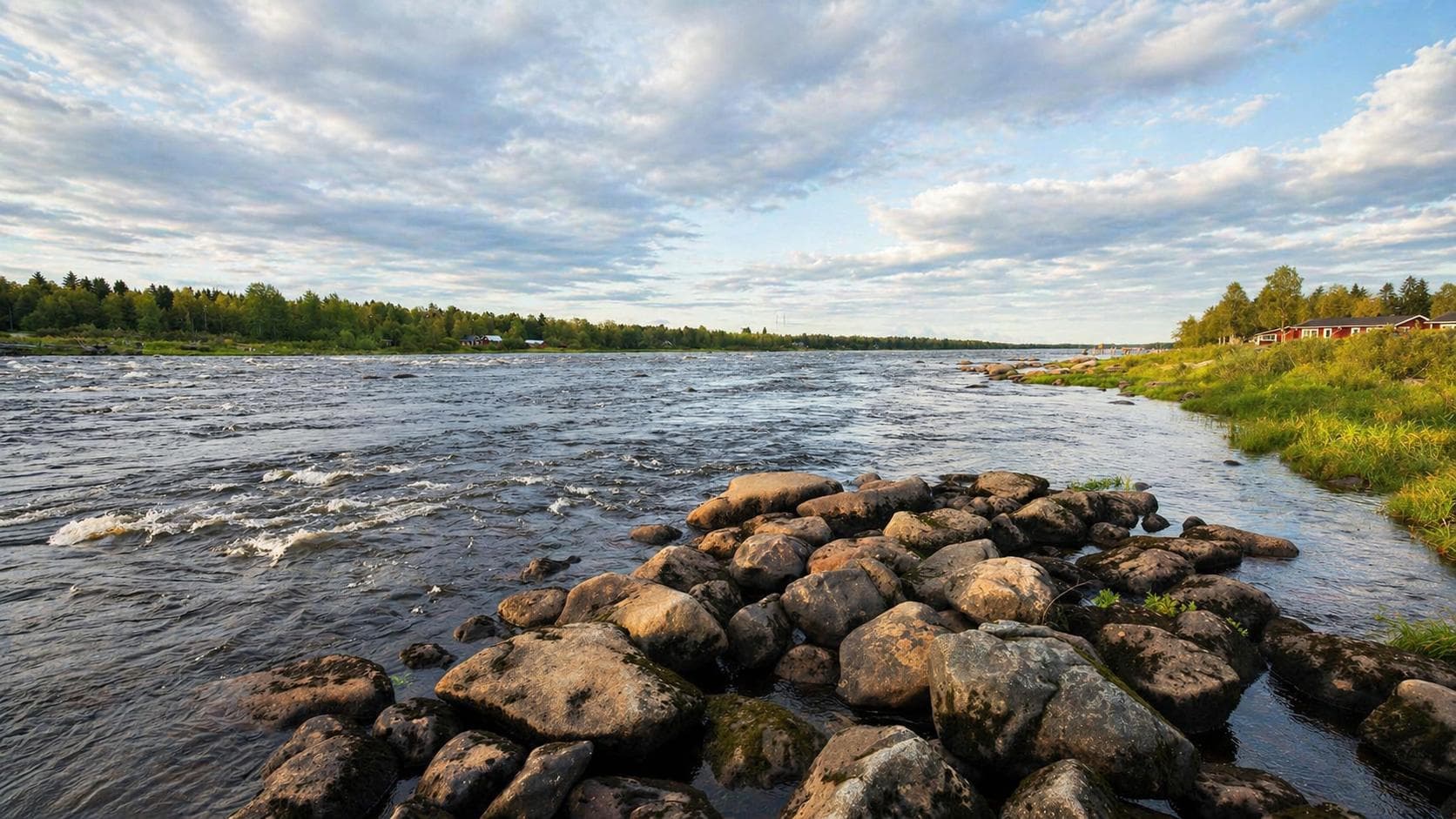
Torneälven and Baltic salmon: what migration data can tell you
Torneälven/Tornionjoki is one of the most important Baltic salmon rivers, and its migration data is closely watched during the season. At Kattilakoski, about 100 km upstream from the river mouth, salmon and other migratory fish are counted using sonar. Monitoring usually starts in mid-May and continues at least until the end of August.
The count is useful, but it is not a direct fishing forecast. It shows how many fish have passed one monitoring point. It does not show where those fish will hold, when they will take a fly or lure, or which stretch will fish best.
That is why the data should be read as a migration signal, not as a trip decision on its own. Final estimates are available only after all datasets have been analysed, usually in early winter, so live counts should not be treated as final stock data.
Long-term monitoring from Tornionjoki/Torneälven feeds into stock assessment, fisheries advice and Baltic salmon management. It helps compare current runs with previous years and shows how the current run fits into the wider Baltic salmon picture.
Recent Baltic salmon trends make this context especially relevant. SLU reported weaker adult salmon returns in several rivers in 2023 and 2024, including northern systems such as Torneälven and Råneälven. Researchers suspect that lower survival at sea may be part of the explanation, but the exact causes are still being studied.
For anglers, the takeaway is simple: use migration data as context, not as a standalone trip decision. Before planning a trip to Torneälven, check it together with:
- current water level and recent trend,
- water temperature,
- local rules for the stretch,
- fresh catch reports,
- permit availability,
- the specific part of the river you plan to fish.
Sources: Luke / Natural Resources Institute Finland, SLU, ICES.