

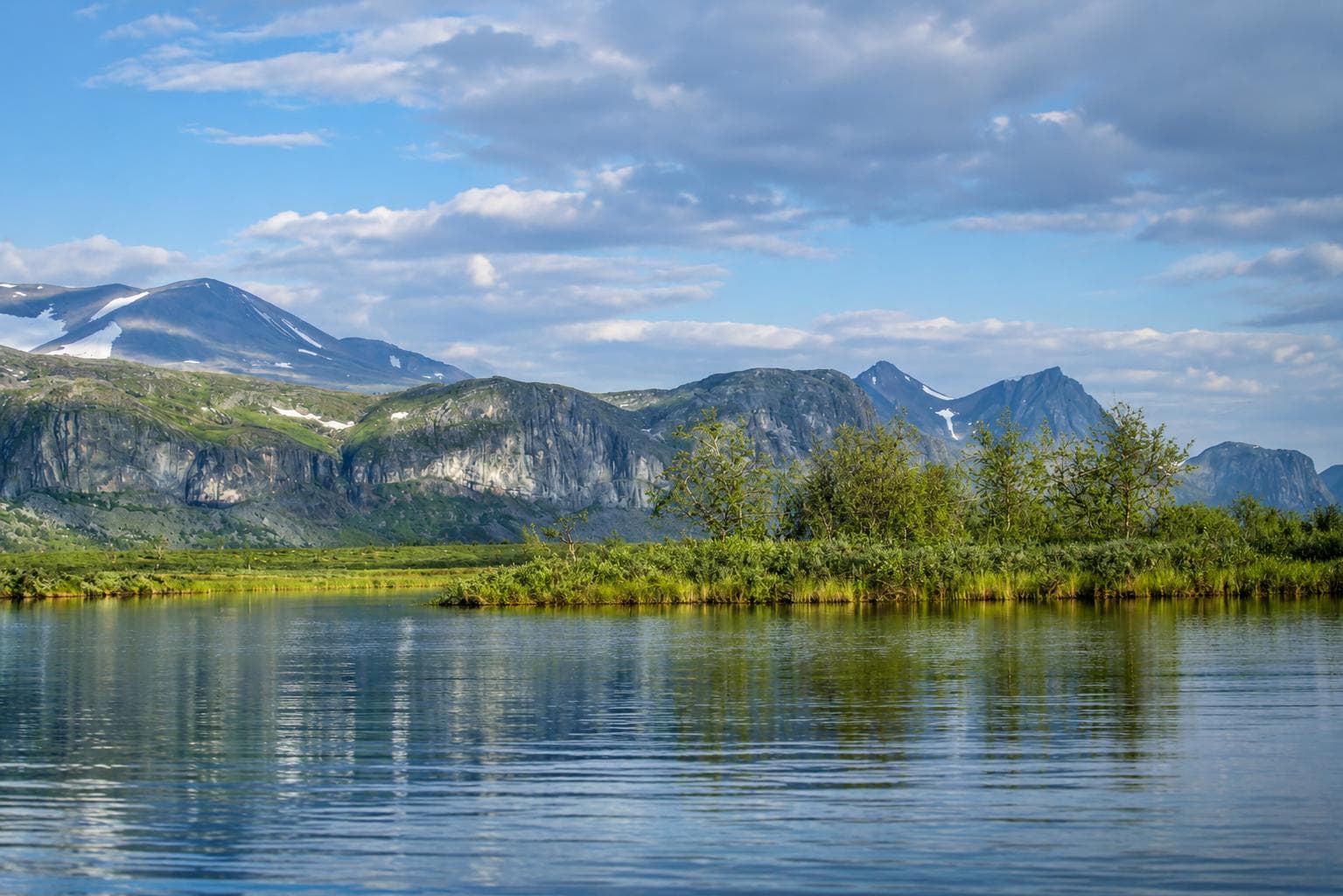
Tjuonajokk / Kaitumälven
Tjuonajokk / Kaitumälven is a remote northern fishing destination in the Kaitum River system, best known for grayling, trout and arctic char rather than salmon. For anglers used to classic salmon beats, this water should be approached differently: the value lies in wilderness salmonid fishing, clear northern water, current structure and careful access planning.
The main profile is grayling-first fishing, with trout and arctic char forming the wider salmonid context. Salmon may be relevant farther downstream in the Kaitum system, but it should not define this profile. Tjuonajokk is better understood as lodge-based salmonid water connected to both river and lake environments, where species, access and local rules depend on the exact section being fished.
River character and fishing structure
The Tjuonajokk area is shaped by the Kaitum River and nearby lake-connected waters. Fishing may involve a mix of flowing river sections, streams, lake outlets, current edges and calmer holding water. This makes the area more varied than a single river beat and more dependent on exact water choice.
For grayling anglers, the most relevant water is likely to be found around readable current lines, glides, seams, riffles, necks and edges where fish can feed efficiently. Trout may use deeper pockets, bankside cover, lake outlets and faster broken water, while arctic char is more relevant in lake-connected or colder-water sections. The exact pattern depends on the season, water temperature and local access.
Because this is remote water, planning is part of the fishing. Anglers should not treat Tjuonajokk as an easy-access roadside stretch. Travel arrangements, lodge rules, permit validity, weather and safety all shape how the fishing should be approached.
Season, species and fishing expectations
Tjuonajokk / Kaitumälven should be treated as a northern salmonid area with strong seasonal variation. Grayling may define much of the river fishing, especially where current, insect activity and water level align. Trout can add a more technical element, while arctic char may be relevant in colder or lake-linked waters.
Expectations should stay realistic and condition-based. In colder water, fish activity may be slower and more concentrated around deeper or more stable water. In warmer periods, grayling may become more visible in current and surface-feeding situations. River level, recent weather, insect activity and access to the right type of water should guide the session more than a fixed idea of one target species.
This is not a high-pressure salmon pool environment. It is better understood as remote, mixed salmonid water where observation, mobility and adapting to conditions are more important than following a standard salmon-beat routine.
Tactics and planning
Planning Tjuonajokk / Kaitumälven starts with access and permit details. Anglers should confirm whether the session is organised through a lodge, local permit system or specific access arrangements, and which waters are included. A river session, lake outlet session and char-focused session on lake-connected water will not have the same logic.
For grayling, light tackle, precise presentation and reading current lines may be central. For trout, structure, depth changes, cover and timing can matter more. For arctic char, colder water, lake-connected areas and exact local knowledge may be especially important. In all cases, the method should follow the water rather than the name of the area.
Because the area is remote, weather and safety should be treated as part of the plan. Wind, cold water, changing river levels and distance from services can all affect the session. The best approach is to choose the exact water first, then plan around access, target species, conditions and current rules.
Essential formal notes
Fishing access around Tjuonajokk / Kaitumälven should be confirmed through the lodge, local permit information or the relevant land/water manager before travel. The exact rules may depend on the water, access route, lodge arrangement and local permit conditions. Current information on boundaries, species rules, catch limits, method restrictions, access, accommodation and reporting requirements should always be checked before fishing.
This overview does not replace the current regulations. Full permit conditions, local rules, conservation measures, access restrictions and safety information should be checked on the dedicated permit, lodge or local regulations page before planning a trip.
Final assessment
Tjuonajokk / Kaitumälven is best understood as remote, lodge-based Kaitum salmonid water rather than a classic salmon fishing area. Its value lies in grayling-focused river fishing, trout and arctic char opportunities, wilderness character and the need to plan carefully around access and exact water choice.
This fishing area is best suited to anglers looking for northern wilderness fishing with a mixed salmonid profile. It should be approached with preparation: confirm the access or booking structure, identify the exact water, follow local rules and plan around weather, river level, target species and safe access.