

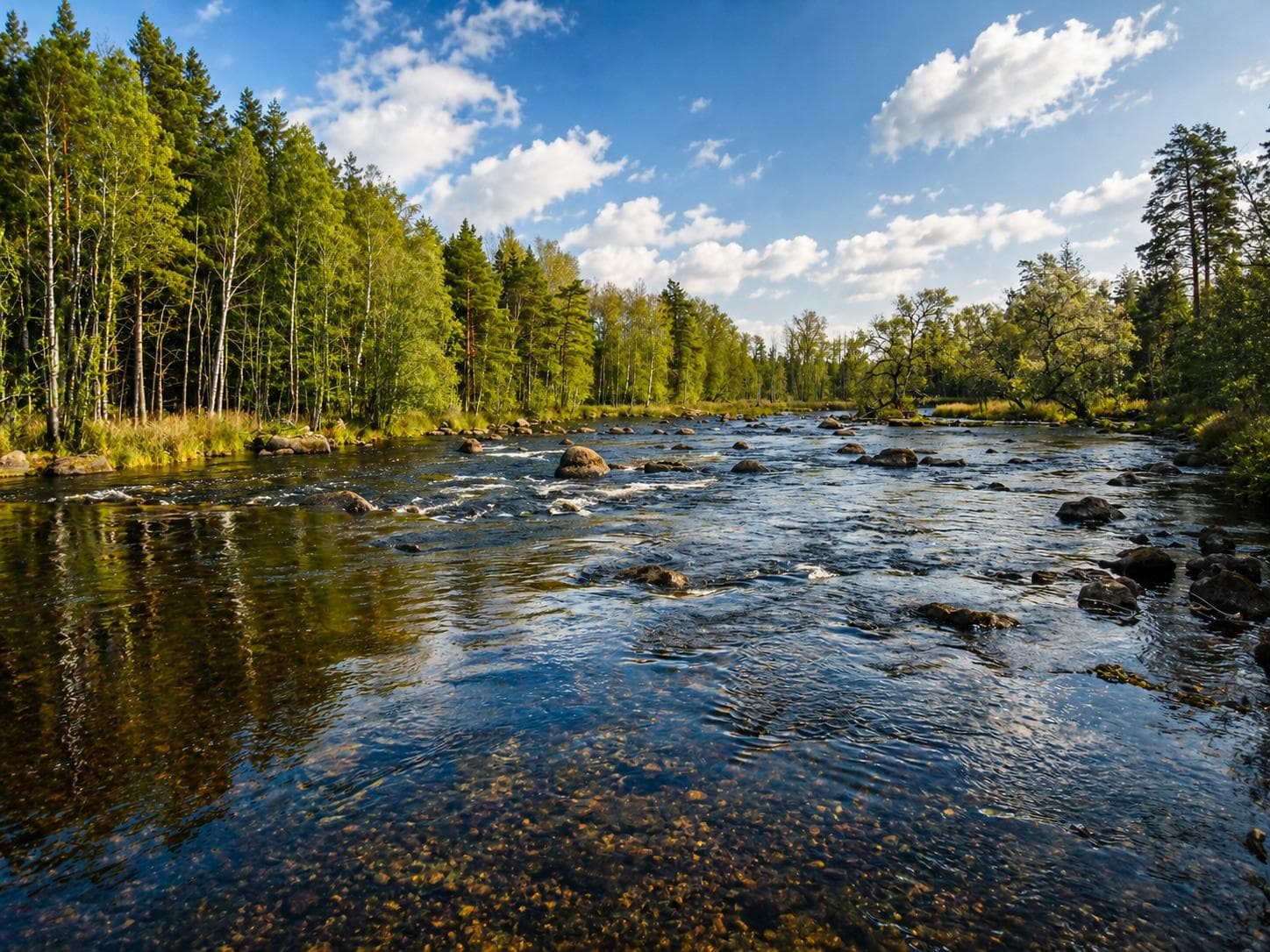
Emån
Emån is a south-east Swedish river in Småland and one of Sweden’s best-known sea-trout rivers. It flows to the Baltic Sea and is known for salmon, but its strongest angling identity is built around large sea trout.
The key reference point is the 15.3 kg sea trout caught in Emån in 1993. Em Herrgård describes it as a 103 cm male sea trout, caught by Lennart Westerlund in Oldman Pool on 16 September 1993.
Emån should be treated as a sea-trout-first river, with salmon also present in the lower salmonid waters. Its southern location also matters: in Emsfors, permits are listed from the second week of March to the penultimate week of September, giving Emån an earlier planning window than northern Swedish salmon
Quick facts
- country: Sweden
- region: Småland / south-east Sweden
- river type: southern Baltic salmon and sea-trout river
- main focus: large sea trout, with salmon also present
- key lower-river areas: Em / Em Herrgård, Emsfors, Grönskog
- known for: large sea trout, historic record fish, limited-access waters
- early-season value: strong on selected lower-river beats
- main rule checks: exact beat, permit quota, season window, method rules, salmon / sea-trout limits
Season and key rules
Emsfors is the most restrictive lower-river option in this profile. iFiske lists only 2 daily permits, available from the second week of March to the penultimate week of September. The same source states that 2 salmon / sea trout over 50 cm may be landed per angler per day, and fishing must stop once that quota is reached.
Grönskog is described as a spring and autumn salmon / sea-trout stretch, especially in March–April and September. The source describes about 6 km of riverside, including 2–3 km of rapid streams, with fly and spin fishing.
Em / Em Herrgård is a limited-rod beat. Em Herrgård lists 4 km of water, with 15 rods per day in spring and 12 rods per day in autumn.
Season heatmap
River character and access
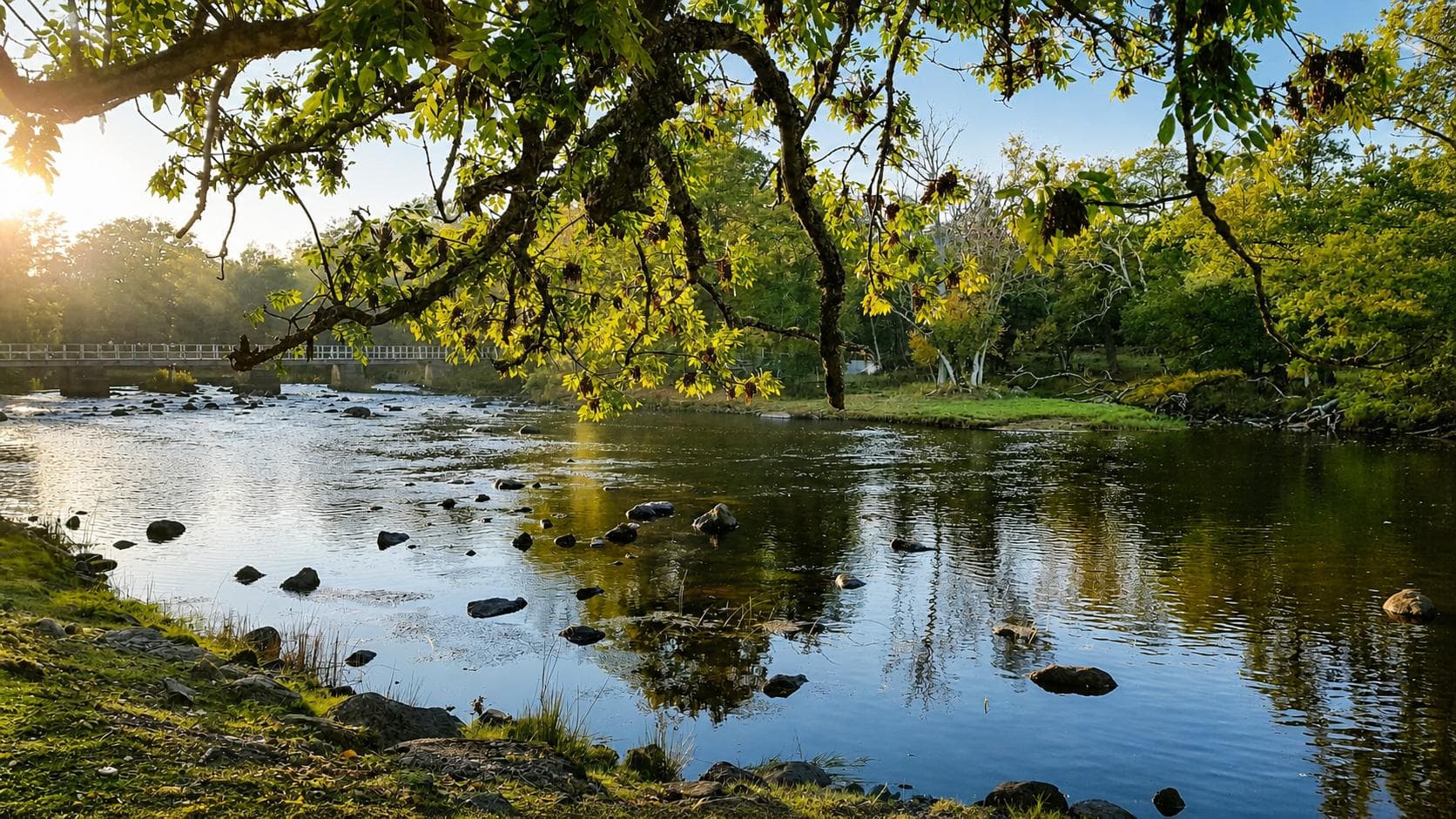
For salmon and large sea trout, the lower river is the first place to understand. Emsfors, Grönskog and Em / Em Herrgård are separate fishing contexts, with different access, permit limits and season windows.
Emsfors is a quota water. With only 2 daily permits, availability can decide the trip before weather, water level or fly choice matter.
Grönskog has a different profile: a longer, more varied stretch with rapid water, spring / autumn timing and both fly and spin fishing.
Fisheries, stretches and permits
Emsfors — quota water with only 2 daily permits; relevant from March to late September. Permit availability should be checked before building a trip around it.
Grönskog — spring / autumn salmon and sea-trout stretch, especially March–April and September, with varied water and rapid sections.
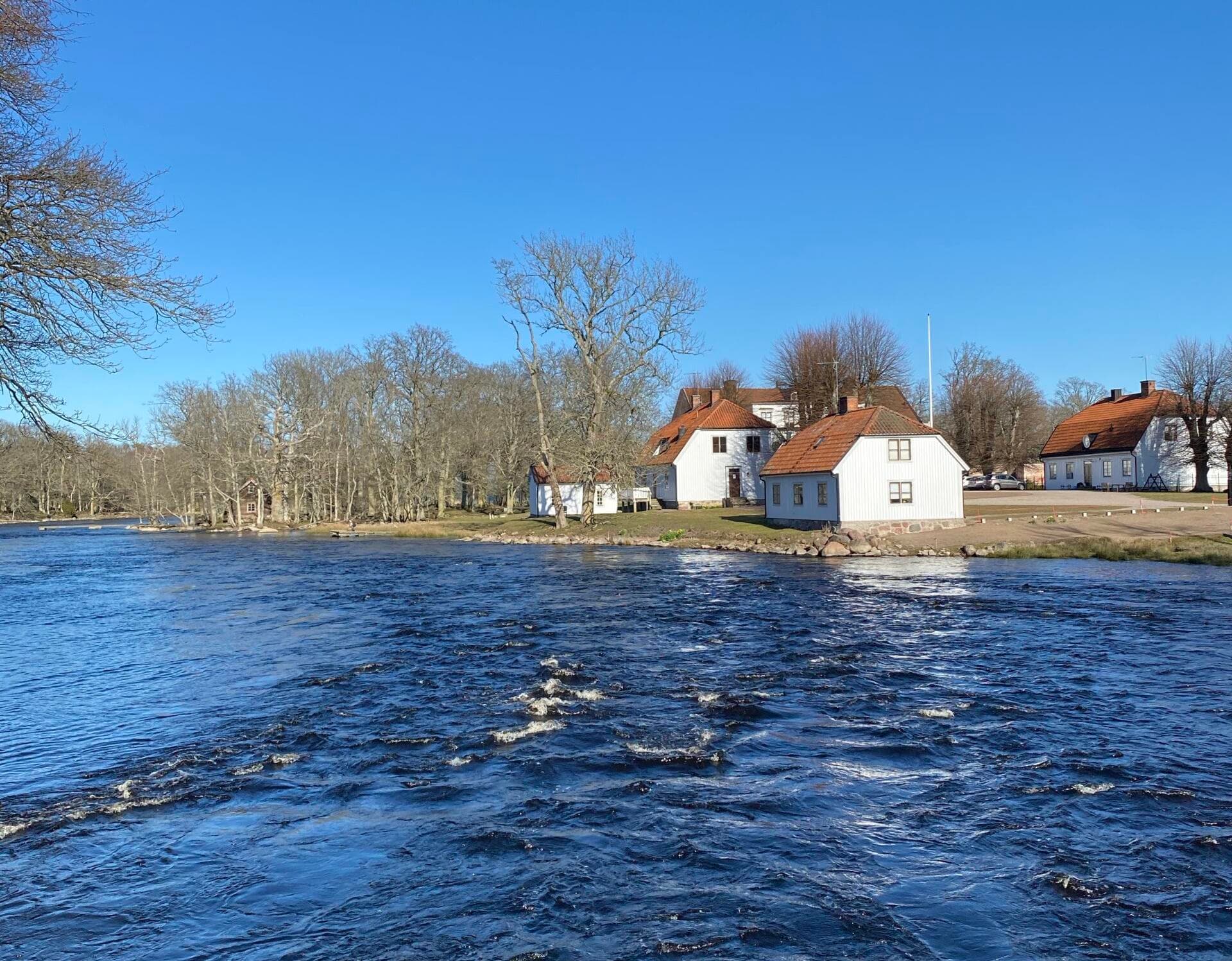
Em / Em Herrgård — historic, limited-access salmon / sea-trout beat strongly linked with Emån’s large sea-trout reputation.
Rules that change the trip
Permit availability can decide the trip
Emsfors has only 2 daily permits. If those permits are gone, that beat is not an option for the day.
Early and late windows matter
Emån can be relevant early because selected lower-river fisheries open in March. Grönskog is also described around spring and autumn fishing, especially March–April and September.
Beat choice changes the plan
Emsfors, Grönskog and Em / Em Herrgård differ in access, permit limits, season windows and fishing character. Choose the beat before planning method, date or expectations.
Target species
Sea trout is the main reason Emån stands out. The river is known for large sea trout, and the 15.3 kg fish from 1993 is central to its angling identity.
Atlantic salmon is also present and can be important in lower-river salmonid waters, but Emån should not be described as salmon-only.
Other fish matter more in inland / mixed-fish waters. They should not drive the main lower-river salmon and sea-trout profile.
What to watch
- Permit availability — especially Emsfors, with only 2 daily permits.
- Early spring window — selected lower-river fishing starts in March.
- Autumn sea-trout window — Grönskog is described around September fishing.
- Beat choice — Emsfors, Grönskog and Em / Em Herrgård are different planning contexts.
- Current beat rules — quotas, minimum sizes and method rules are beat-specific.
What can go wrong
- You treat Emån as one uniform river instead of choosing the exact beat first.
- You plan around Emsfors without checking the 2-permit daily quota.
- You treat Emån as salmon-first and miss that large sea trout is the stronger identity.
- You choose an inland FVO stretch expecting lower-river salmon / sea-trout fishing.
- You plan for summer salmon when the river may be more relevant as an early or autumn sea-trout option.
FAQ about Emån
No. Emån is a salmon and sea-trout river, but its strongest reputation is linked with large sea trout.